Cover Letter Examples for Customer Service: Top Tips
Explore cover letter examples for customer service roles, with ATS keywords, tone guidance, and tips for entry-level, experienced, and career-change applicants.
A strong customer service cover letter isn't built from a universal formula. It depends on your experience, the role you're targeting, and the evidence you can prove. A recent graduate needs a different argument from a customer service manager, while a technical support specialist needs different keywords from a bilingual representative.
Applications deserve serious attention. A 2025 ResumeGo study found that applications with cover letters written specifically to the job had a 53% higher callback rate than applications with no cover letter. Independent 2026 cover-letter research reports that 83% of hiring managers read most cover letters, 94% say they influence interview decisions, and 72% of managers still expect one when it's marked optional.
The eight cover letter examples for customer service below are strategic models, not scripts to copy. Each annotation focuses on tone, ATS language, reader-facing proof, trade-offs, and choices. Every claim should reflect your real background. GetTheCall can help you parse a job listing, identify required language, prepare application materials, and check match progress. Its cover letter feature has been announced as coming soon, so it currently supports the resume and job-matching side of this process.
Table of Contents
- 1. Entry-Level Customer Service Representative Cover Letter
- 2. Career Pivot and Transferable Skills Customer Service Cover Letter
- 3. Experienced Customer Service Manager Cover Letter
- 4. Technical Support Specialist and Customer Success Engineer Cover Letter
- 5. Remote and Virtual Customer Service Representative Cover Letter
- 6. Bilingual and Multilingual Customer Service Representative Cover Letter
- 7. Omnichannel and Customer Service Operations Cover Letter
- 8. Customer Service with Industry Specialization Cover Letter
- 8-Example Customer Service Cover Letter Comparison
- Turn the Right Example Into Your Own
1. Entry-Level Customer Service Representative Cover Letter
An entry-level letter must make limited experience feel usable. The employer is asking whether you can treat customers professionally, learn unfamiliar systems, and stay composed when a question becomes a problem. Your evidence can come from retail, university projects, volunteering, technical work, or responsibilities outside paid employment.
A recent graduate might describe helping customers compare products, then explain how they resolved disagreement during a group project. A software engineer could focus on troubleshooting and explaining complex issues clearly. A parent returning to work might use volunteer coordination, community interactions, and scheduling responsibilities as proof of reliability and organization.
Sample model
Dear Hiring Manager,
I'm excited to apply for the Customer Service Representative position at [Company]. My retail experience, clear written communication, and experience responding to customer concerns have prepared me to provide patient, accurate support while learning your systems.
In my retail role, I helped customers compare products, answered questions during busy shifts, and worked with colleagues to resolve issues calmly. During a university project, I also helped settle team disagreements by listening to different perspectives and guiding the group toward a practical solution. These examples show how I communicate, organize information, and work through problems when people need a clear response.
I'm particularly interested in [Company] because [specific company detail]. I'd welcome the opportunity to learn your CRM, understand your customers' needs, and contribute to a team that values respectful service.
Thank you for your consideration. I'd be glad to discuss how my transferable experience and willingness to learn could support your customers.
Why this version works
The tone is confident but coachable. Naming the exact job title early helps the reader place the application, while terms such as customer service, written communication, problem-solving, CRM, and customer support connect the letter to the role without turning it into a keyword list. The wording also keeps the proof honest. Retail work demonstrates customer contact and composure, but it does not pretend to be formal contact-center experience.
Use the ATS-friendly resume guide to keep the letter and resume consistent in language and formatting. GetTheCall's job-listing parser can help identify required terms before you choose which ones your evidence supports.
Entry-level tailoring should make the trade-offs visible:
- Replace missing service history: Add relevant coursework, certifications, volunteer work, or club responsibilities.
- Show responsibility with scale: If you scheduled work for 10+ team members, include that only when accurate, and explain what the responsibility required. For structure, refer to the customer service cover letter format guidance.
- Give the employer a reason: Replace [specific company detail] with a real product, service, customer group, or company priority.
- Keep claims proportional: “Ready to learn” is credible when paired with an example of learning a tool, resolving confusion, or managing competing tasks.
The trade-off is a lack of major service metrics. That is acceptable for an entry-level applicant. A concrete responsibility, such as calming a disagreement or supporting customers during a busy shift, carries more weight than calling yourself an “excellent people person.”

2. Career Pivot and Transferable Skills Customer Service Cover Letter
A career pivot letter should state the change directly. Hiding your previous field makes the reader work too hard to understand your application, while explaining the transition gives you control over the narrative.
A project manager moving into customer success can connect stakeholder management, timeline coordination, and risk communication to onboarding and account support. A teacher can translate adult learning, curriculum design, and presentations into customer education. A nurse, therapist, or military veteran can show how active listening, crisis management, operations, and team coordination apply to customer challenges.
Sample model
Dear [Hiring Manager Name],
After seven years in project management, I'm transitioning into customer success because my greatest fulfillment comes from helping people reach practical outcomes and building lasting relationships. Your Customer Success Specialist role is a deliberate next step, not a departure from my experience.
In consulting, I managed stakeholders with competing priorities, coordinated complex timelines, and resolved conflicts before they affected delivery. I regularly translated technical updates into clear decisions for clients and internal teams. Those responsibilities directly developed the communication, organization, problem-solving, and relationship-management skills required in your posting.
I've also prepared intentionally for this move through [relevant course, certification, volunteer project, or customer success project]. While my career path has been unconventional, my experience leading client-facing projects has equipped me to understand customer goals, manage expectations, and follow issues through to resolution.
I'm drawn to [Company] because [specific reason]. I'd welcome the chance to discuss how my background can support adoption, retention, and a thoughtful customer experience.
The tailoring decisions that matter
The opening explains why customer success, not why the previous career was disappointing. That distinction changes the tone from defensive to purposeful. The middle paragraph then maps prior responsibilities to the target role, rather than listing unrelated achievements.
Review the full posting, not just the short advertisement. Robert Half's tailoring guidance recommends examining the job description for detailed skills, daily tasks, and reporting structures. Use GetTheCall's job description analyzer to identify terms such as conflict resolution, onboarding, stakeholder management, CRM, customer education, and escalation handling, then prove each term with a real example.
A career change needs a bridge, not an apology.
The reader-facing proof should show intentional preparation. Mention a relevant course, certification, volunteer role, or passion project if you have one. If you don't, explain the client-facing work you've already done and the result it produced without inventing a service metric.
The main trade-off is focus. Career changers often include too much history. Keep the letter centered on the target role and select only the past achievements that answer its requirements. This resume-tailoring resource can help you align the broader application with the language used in the posting.

3. Experienced Customer Service Manager Cover Letter
A management letter needs to move beyond personal service ability. Hiring managers want evidence that you can lead people, improve processes, interpret performance, and protect the customer experience at scale.
Use your biggest business impact near the beginning. A supervisor might discuss reducing average handle time while improving CSAT. A call center manager could describe a peer mentoring program that lowered first-year representative turnover. A support operations lead may focus on a CRM implementation that improved response time. These examples are useful only when they're your actual achievements and you can explain the context behind each number.
Sample model
Dear [Hiring Manager Name],
I'm applying for the Customer Service Manager position with [Company] after leading customer support teams through performance improvement, coaching, and process change. In my current role, I reduced average handle time by 25% while improving CSAT by 15%, by reviewing quality data, coaching representatives on call structure, and refining escalation procedures.
That work taught me that efficiency and empathy don't need to compete. I paired performance reviews with practical coaching, shared successful approaches across the team, and used customer feedback to identify where process changes would have the greatest effect. I've also led initiatives involving quality assurance, team development, and CRM workflows.
Your posting emphasizes [team scaling, omnichannel strategy, or quality assurance]. My experience with [specific example] matches that need, and my use of [Agile, Six Sigma, or another relevant framework] would help me contribute quickly.
I'd welcome the opportunity to discuss how I could help [Company] build a stronger service operation, develop its people, and improve customer outcomes.
Read the numbers as a story
The metrics above come from the planned example and must be replaced unless they're yours. Customer service cover letter guidance emphasizes proof such as CSAT, FCR, resolution time, and ticket volume, and it notes a cited industry claim that candidates who demonstrated specific performance metrics and de-escalation experience were 52% more likely to receive interviews than equally experienced candidates who didn't quantify achievements. Treat the number as source-reported, not as a promise.
The best management letter explains challenge, approach, and result. “Improved response time” is weaker than explaining what caused delays, what workflow changed, and how the team measured progress. Pull competencies from the posting, including team scaling, omnichannel strategy, quality assurance, workforce planning, and coaching, but don't add a framework to sound senior.
A resume and letter should support each other. Use the ATS resume checker to review keyword and parsing issues, then make sure the cover letter adds context rather than repeating every resume bullet.

4. Technical Support Specialist and Customer Success Engineer Cover Letter
Technical customer service letters must connect two kinds of proof: your ability to diagnose a technical issue and your ability to explain the solution clearly to someone without the same technical background.
Choose evidence for the product and audience. A Salesforce support specialist might discuss customization, data integrity troubleshooting, and user adoption mentoring. An AWS customer success engineer could explain solutions architecture guidance and infrastructure decisions. A healthcare software support engineer should connect troubleshooting with regulatory knowledge and careful communication.
Sample model
Dear [Hiring Manager Name],
I'm applying for the Technical Support Specialist role at [Company], bringing hands-on experience troubleshooting [platform, operating system, database, or product] and explaining technical solutions to nontechnical users. My [relevant certification] supports practical work in [specific environment], including diagnosing issues, documenting fixes, and helping users adopt new workflows.
In one project, I diagnosed a database query inefficiency affecting [verified user or account scope], documented the fix, and trained the operations team to prevent recurrence. The work required technical investigation, clear written communication, and collaboration with engineering and product teams. I'd bring the same structured approach to customer issues at [Company].
Your posting mentions [tool, platform, language, or technical requirement]. My experience with [real example] matches that need, while my customer communication background helps me keep users informed throughout troubleshooting.
I'd welcome the opportunity to support customers, improve documentation, and share recurring product feedback with your technical teams.
Make the technical proof accessible
Use the exact tools named in the job description, then show what you did with them. ATS-first customer service examples recommends naming the exact position and placing a quantified fact early when one is available. Do not list AWS, Salesforce, Microsoft, or another platform as decoration. Connect each tool or certification to a customer outcome, workflow, or support responsibility.
The sample works as a strategic model because it serves a technical hiring audience while keeping the customer's experience visible. Its tone is precise but readable. Its ATS language comes from the job posting, and its proof comes from one troubleshooting example rather than an unverified inventory of tools.
Build the example in this order:
- Diagnose the issue: Identify the failure, scope, and likely cause.
- Communicate the solution: Explain what the customer needed to know in plain language.
- Prevent recurrence: Document the fix, update knowledge resources, or train the relevant team.
- Collaborate across functions: Show how product, engineering, sales, or operations contributed.
Tailor every bracketed detail. Replace the database example with a verified case from your work, name the actual platform, and describe the customer or team affected without overstating the result. If you lack a certification, omit it rather than borrowing one from the model.
The trade-off is technical density. Recruiters need searchable terms, while customers need clarity. One credible example can satisfy both audiences when it shows troubleshooting, ownership, and empathy in the same interaction.
5. Remote and Virtual Customer Service Representative Cover Letter
A remote customer service letter must show more than comfort with a home office. It should prove self-management, dependable digital communication, independent judgment, and consistent support across channels. Treat the sample as a strategic model, not wording to copy. Its audience is a recruiter hiring for distributed work, so each paragraph connects remote habits with customer outcomes.
Lead with verified evidence. A representative might describe maintaining a first-contact resolution rate across email, chat, and phone while working remotely. A freelance support specialist could explain learning different platforms across remote-first companies. Someone moving from office-based work can show how they rebuilt workflows for virtual collaboration. Choose the example that matches the employer's main concern.
Sample model
Dear [Hiring Manager Name],
I'm excited to apply for the Remote Customer Service Representative position at [Company]. In my previous remote role, I supported customers through email, chat, and phone while managing my own queue, documenting updates, and coordinating with colleagues across a distributed team.
I'm comfortable using [Zendesk, Intercom, Slack, Microsoft Teams, Asana, or another verified tool] to manage conversations, share context, and keep work visible. When an issue requires help from another department, I provide a concise summary, record the next action, and keep the customer informed rather than waiting silently for an update.
Your posting emphasizes [self-starter, independent work, asynchronous communication, flexible schedule, or time-zone coverage]. My experience with [specific example] demonstrates that I can work independently while staying responsive and connected to the wider team. I also have a reliable workspace and can cover [verified time zone or schedule].
I'd welcome the chance to discuss how my remote support habits and customer-first communication could contribute to your team.
The opening identifies the role and establishes remote experience. The second paragraph supplies ATS language through tools and workflows, while the handoff example gives the reader proof of judgment and communication. The third paragraph should mirror the posting's wording, but only where it accurately describes your experience.
Match remote proof to the posting
Use the employer's actual stack. Naming Zendesk, Intercom, Slack, Microsoft Teams, Asana, or Monday.com helps only when you have used the tool or can accurately describe related experience. If the role emphasizes asynchronous communication, explain how you document handoffs. If it requires schedule flexibility, state the hours or time zones you can cover.
Articuler's customer service guidance recommends four short paragraphs and under 400 words, with the middle section reserved for one or two specific achievements supported by numbers. That format keeps remote-role evidence easy to scan.
Avoid turning the home-office paragraph into an equipment inventory. Mention reliability when the posting asks for it or when it supports a clear work requirement. The trade-off is specificity: searchable terms help ATS screening, but unverified tools or vague claims weaken credibility. Keep the central argument on queue management, clear communication, response standards, and responsible escalation.

6. Bilingual and Multilingual Customer Service Representative Cover Letter
Language ability becomes persuasive when you explain how it improves the customer interaction or expands the team's coverage. Writing “bilingual” in a skills list leaves the reader guessing about proficiency, context, and business value.
A Spanish-English representative might describe supporting customers in Latin American markets. A Mandarin-speaking SaaS specialist could focus on onboarding and technical support for enterprise users. A French-German-English representative might explain how multilingual support helped a company communicate across several geographic markets.
Sample model
Dear [Hiring Manager Name],
I'm applying for the Bilingual Customer Service Representative position at [Company], offering fluent English and Spanish communication, experience supporting diverse customers, and a careful approach to adapting explanations across cultures. My proficiency is [CEFR, ACTFL, or certification level], and I've used both languages in [verified professional, volunteer, academic, or community setting].
In my previous role, I supported [verified customer group or market] by listening for both the stated problem and the communication style that would make the solution easiest to understand. I documented issues clearly in the CRM, confirmed understanding before closing the interaction, and shared recurring language-specific feedback with colleagues.
I'm especially interested in [Company] because [specific market, product, or customer reason]. Your posting asks for [language requirement or cultural competency], and my experience with [specific example] shows how I can contribute beyond translation. I understand that effective support also requires cultural awareness, patience, and flexibility.
Thank you for considering my application. I'd welcome the opportunity to discuss how my language skills can support your customers and team.
Show language and cultural judgment
State your proficiency using a recognized framework such as CEFR or ACTFL, or name a relevant certification such as DELF for French. Don't claim native fluency if your ability is professional or conversational. If you're a heritage speaker or immigrant, a brief note about your authentic connection to a language community can add context, but include it only if you're comfortable.
Use the job parser to identify language requirements and cultural competency terms, then mirror them naturally. Pair language ability with a service behavior, such as adapting explanations, confirming understanding, or recognizing communication norms in a particular market.
The trade-off is avoiding stereotypes. Cultural awareness isn't a claim that every customer from a region communicates the same way. It's evidence that you adjust respectfully, ask clarifying questions, and avoid assuming that a translated answer automatically solves the customer's problem.
Language proficiency is strongest when the letter shows what you do with it.
Quantify customer volume, resolution rate, or coverage only when the figures come from your records. A statement such as “supported 500+ Spanish-speaking customers monthly” belongs in the letter only if you can verify it.
7. Omnichannel and Customer Service Operations Cover Letter
An omnichannel operations letter must prove that you can coordinate channels, not list them. Customers may move from chat to email, phone, social media, or a ticketing system. Each handoff needs preserved context, suitable routing, an appropriate tone, and clear response expectations.
The audience is usually an operations manager, support leader, or director. A manager might need evidence of a Zendesk integration across channels. A team lead may value coaching that keeps the brand voice consistent across email, Twitter, Facebook, and live chat. A director may focus on channel analytics, volume forecasting, routing logic, knowledge management, or self-service.
Sample model
Dear [Hiring Manager Name],
I'm applying for the Customer Service Operations role at [Company], where I can contribute experience coordinating support across [verified channels] and improving the workflows behind each interaction. I've worked with [Zendesk, Freshdesk, Intercom, or other verified platforms] to organize queues, preserve customer context, and help teams provide consistent service.
In one project, I implemented [shared inbox, routing workflow, CRM integration, knowledge base, or another real initiative]. The challenge was [specific operational problem]. I addressed it by [specific approach], then monitored [verified metric or service standard] to evaluate the result. This example gives the reader both sides of the work: the system change and the customer or team outcome.
Your posting highlights [channel strategy, routing logic, knowledge management, analytics, or quality assurance]. I understand that social media inquiries may call for a faster, more personal response than email, while phone support depends on real-time listening and accurate documentation. I've used those differences to shape coaching, workflows, and reporting.
I'd welcome the opportunity to discuss how my operational experience could help [Company] connect channels, reduce avoidable effort, and give representatives better customer context.
Make the system visible
For formatting and keyword choices, Customer service cover letter guidance from cvali recommends clear ATS-friendly formatting, exact job-title language, and one to three quantified achievements connected to outcomes such as CSAT, first-contact resolution, ticket volume, or response time. In an operations letter, place each outcome beside the process that produced it.
Use the employer's platform names only when they match your experience. Mention knowledge bases, FAQs, chatbots, community forums, or self-service tools when you have worked with them. Explain how those resources reduce repeated questions and help representatives resolve issues consistently.
A credible letter also acknowledges trade-offs. Channels do not share identical response rules. Explain how routing, tone, service standards, documentation, and reporting change by channel, then connect those choices to a real project or verified result.
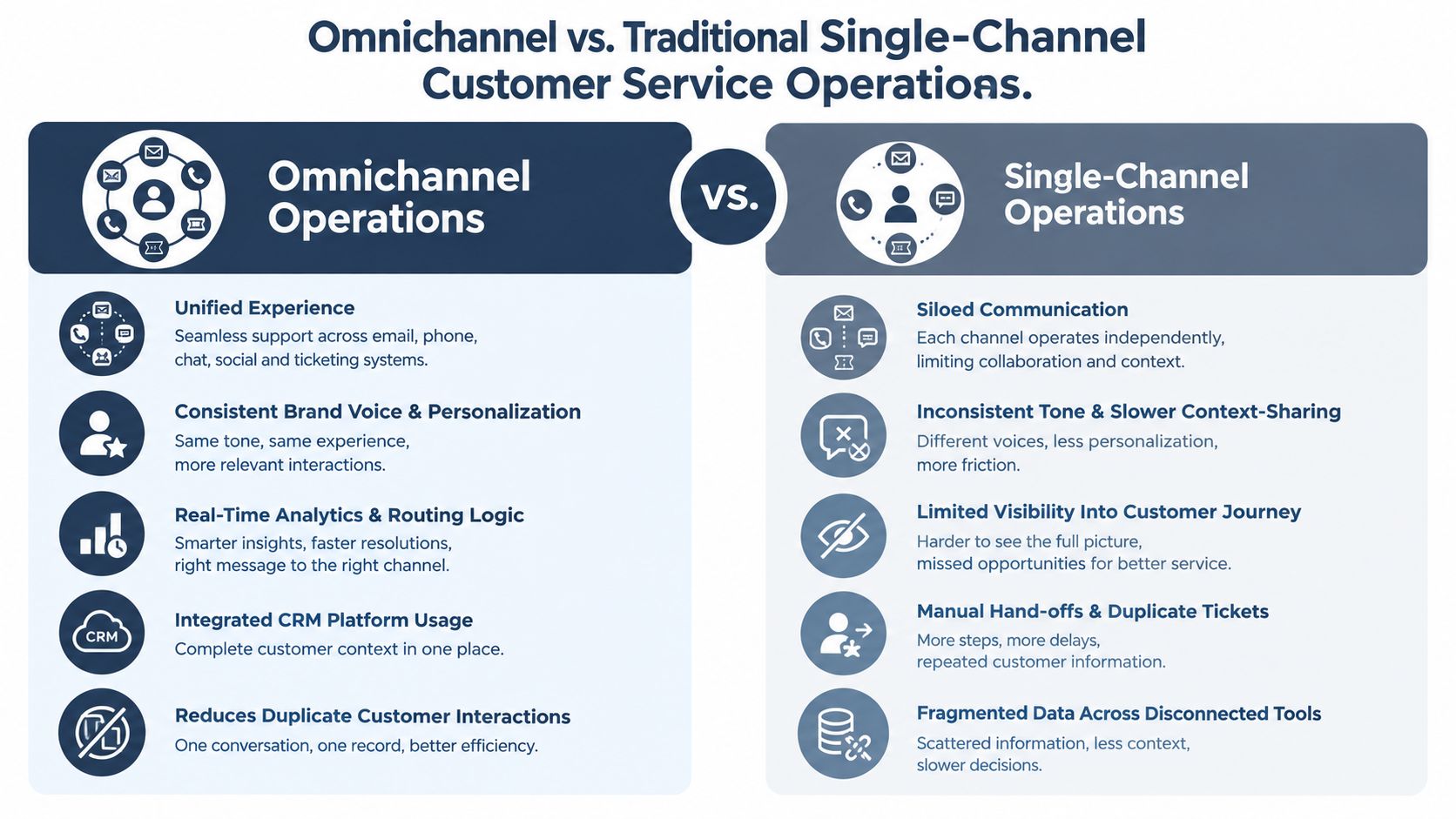
This short video can help clarify the operational distinction before you write:
8. Customer Service with Industry Specialization Cover Letter
Industry specialization can shorten the explanation an employer needs from you. A healthcare support professional understands privacy-sensitive workflows. A mortgage professional knows lending terminology. A legal operations specialist recognizes billing and conflict-check concerns. A hospitality manager understands how guest experience connects with property operations.
The letter should still focus on customer outcomes, not industry vocabulary.
Sample model
Dear [Hiring Manager Name],
As a [verified credential] with [verified experience] in [industry], I'm applying for the Customer Success Manager role at [Company]. My background combines customer communication with practical knowledge of [relevant regulation, workflow, platform, or operating environment], allowing me to explain complex requirements clearly and support customers through sensitive decisions.
In my previous role, I [specific industry problem]. I responded by [specific action], coordinating with [relevant team] and documenting the process so the customer could move forward with confidence. This experience prepared me to support [Company's customers] while respecting the compliance, accuracy, and service expectations described in your posting.
I'm particularly interested in [Company] because [specific product, market, or mission detail]. Your need for [industry keyword, regulation, or tool] matches my experience with [real example]. I also follow [relevant association, publication, event, or continuing education source], which helps me stay engaged with changes in the field.
I'd welcome the opportunity to discuss how my industry knowledge and customer-first approach could help your team deliver clear, dependable support.
Connect credentials to action
Lead with the credential only when it's relevant and real. A HIPAA-related qualification should connect to patient-data workflows, not sit alone in the first sentence. A CPA, Series 7, SHRM, or AHIMA credential should be followed by the customer problem it helps you solve.
Use the job description analyzer to find industry-specific terms, regulations, and tools, then select only the language you can support. A healthcare SaaS candidate might describe guiding a clinic through a compliant data migration. A former mortgage broker can explain lending regulations, rate structures, or underwriting processes. A hospitality manager can connect guest experience with property management systems and housekeeping operations.
The trade-off is jargon. Industry knowledge helps you look prepared, but too much terminology can make the letter hard to read. Define the customer impact in plain language, then use specialized terms where they demonstrate legitimate fluency.
Employer screening may also depend on ATS matching. Jobscan's ATS guidance explains that systems scan resumes for job titles, skills, education, and other terms recruiters seek. The same principle supports natural keyword alignment in a cover letter, but never add a certification, regulation, or tool you haven't used.
8-Example Customer Service Cover Letter Comparison
| Cover Letter Type | Implementation Complexity 🔄 | Resources Needed ⚡ | Effectiveness / Outcomes ⭐ | Ideal Use Cases | Key Advantages 📊 / Tip 💡 |
|---|---|---|---|---|---|
| Entry-Level Customer Service Representative Cover Letter | Low, easy template adaptation 🔄 | Minimal, keywords, 1–2 short examples ⚡ | ⭐⭐, improves ATS pass rate and rapport | Recent grads, career changers, returning-to-work | 📊 Levels the playing field; easy to customize. 💡 Quantify small wins and mirror job keywords. |
| Career Pivot / Transferable Skills Cover Letter | Medium, requires clear narrative linking past roles 🔄 | Moderate, concrete parallels, optional coursework/certs ⚡ | ⭐⭐⭐, strong when narrative is coherent and evidence-backed | Mid-career changers, professionals switching industries | 📊 Highlights transferable strengths and intentionality. 💡 State the pivot clearly and show why. |
| Experienced Customer Service Manager Cover Letter | Medium–High, needs leadership framing and metrics 🔄 | High, quantifiable results, methodologies, team examples ⚡ | ⭐⭐⭐⭐, positions candidate for management roles | Candidates with 5+ yrs aiming for lead/manager/director | 📊 Demonstrates measurable business impact. 💡 Lead with your biggest business achievement. |
| Technical Support Specialist / Customer Success Engineer Cover Letter | Medium, balance technical depth with clarity 🔄 | High, certifications, technical examples, case studies ⚡ | ⭐⭐⭐⭐, very effective for technical CS roles | SaaS, IT support, engineering-adjacent CS positions | 📊 Reduces escalations and shows product ownership. 💡 Name certs early and give one tech+customer impact example. |
| Remote / Virtual Customer Service Representative Cover Letter | Low–Medium, address remote-work credibility 🔄 | Moderate, remote metrics, tools, home-office details ⚡ | ⭐⭐⭐, reassures remote hiring managers and widens opportunities | Fully remote or hybrid CS roles, distributed teams | 📊 Shows autonomy and tool fluency. 💡 Lead with a specific remote-work achievement and list relevant tools. |
| Bilingual / Multilingual Customer Service Representative Cover Letter | Low–Medium, must verify and specify proficiency 🔄 | Moderate, proficiency frameworks/certifications, usage metrics ⚡ | ⭐⭐⭐⭐, high impact for multilingual markets | Global companies, regional support roles, multilingual customer bases | 📊 Expands market reach and reduces friction. 💡 State proficiency level (CEFR/other) and quantify language-driven impact. |
| Omnichannel / Customer Service Operations Cover Letter | High, requires demonstration of cross-channel strategy 🔄 | High, platform experience, analytics, integration examples ⚡ | ⭐⭐⭐⭐, strong for operational and enterprise roles | Omnichannel platforms, CS ops, platform-integrated teams | 📊 Shows strategic channel management and efficiency gains. 💡 Reference platforms and give concrete omnichannel impact. |
| Customer Service with Industry Specialization Cover Letter | Medium–High, must reflect domain knowledge and compliance 🔄 | High, industry credentials, regulatory examples, domain vocab ⚡ | ⭐⭐⭐⭐, very effective in regulated or niche sectors | Healthcare, fintech, legal, real estate, hospitality, etc. | 📊 Faster time-to-productivity and credibility. 💡 Lead with your top credential and one industry-specific result. |
Turn the Right Example Into Your Own
Start with the example closest to the role you want, not the one that sounds most impressive. An entry-level applicant shouldn't force a manager's structure onto a first application, and a technical support candidate shouldn't rely on a general customer service letter that never names the relevant platform.
Read the employer's job posting and full description carefully. Highlight repeated requirements, tools, channels, customer groups, and outcomes. Independent customer service cover-letter guidance recommends a short, four-paragraph format with the middle section reserved for specific achievements, while ATS-first guidance emphasizes using the exact position name and connecting evidence to the role.
Then make five practical edits:
- Choose the strongest proof: Select one or two experiences that directly answer the employer's biggest needs.
- Replace generic claims: Change “I provide excellent customer service” to a verified example involving de-escalation, troubleshooting, response time, CSAT, FCR, ticket volume, or another relevant measure.
- Mirror terminology naturally: Use the employer's wording for CRM tools, channels, workflows, and skills when it accurately describes your experience.
- Match the tone: A formal financial-services employer may expect restraint, while a consumer brand may welcome warmer language. Professional doesn't mean stiff.
- Keep the letter focused: Aim for three to four short paragraphs, roughly 150 to 400 words, and one page, as recommended by customer service cover-letter format guidance.
Every number needs to be verifiable. Don't borrow a metric from an example, round an estimate into a precise result, or claim a skill because it appears in the job description. If you're changing industries or returning to work, translate your actual experience into customer-service evidence rather than trying to disguise your career history.
ATS tools can help with alignment, but keyword matching isn't the whole application. GetTheCall can parse a listing, map your experience to required language, and show live match progress while you edit related application materials. Use that information as a review aid, then read the finished letter as a person. It should sound like you understand the customers, the work, and the reason this particular company interests you.
A strong cover letter translates real experience into the employer's language. It doesn't manufacture a perfect background. It makes the relevance easy to see.
GetTheCall can parse a target job listing, align your verified experience with its required skills and keywords, and provide a live ATS Role Match score as you refine your application. Visit GetTheCall to turn your existing resume or LinkedIn profile into a job-specific application foundation for customer service roles.